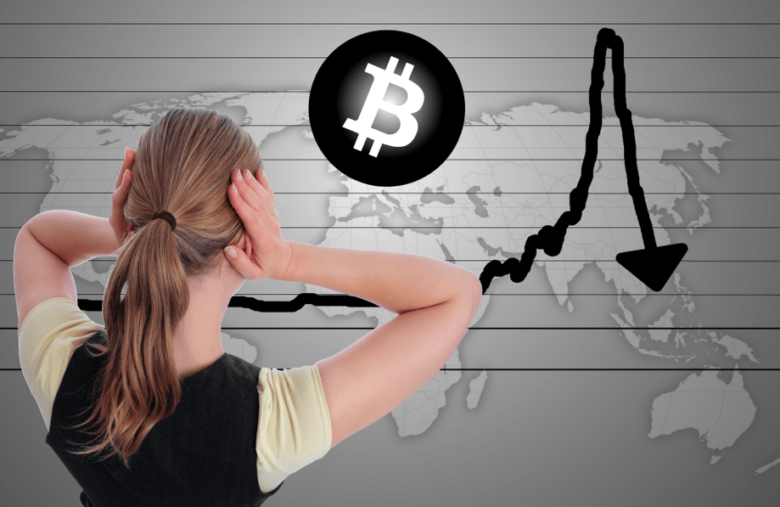
What is FOMO in Crypto? Fear of Missing Out — Explained and How to Overcome It
December 2017. Your friend calls you, barely able to contain his excitement.
“Bitcoin just crossed $15,000. I bought at $8,000 — I’m up nearly 100% in two months. You need to get in NOW before it hits $50,000.”
You had heard about Bitcoin before but never bought. Now, watching your friend’s gains and seeing the chart going vertical, something visceral happens. A feeling that is part anxiety, part urgency, part regret — all mixed into one overwhelming impulse:
Buy now. Or miss the chance of a lifetime.
You bought at $18,000.
By February 2018, Bitcoin was at $6,000. Your ₹2 lakh investment was worth ₹67,000.
That feeling that made you buy — that is FOMO. And it has cost crypto investors more money than almost any other single factor in this market’s history.
What is FOMO in Crypto?
FOMO stands for Fear of Missing Out.
In crypto, FOMO refers to the anxious, impulsive feeling that arises when investors believe a lucrative opportunity is happening without them — pushing them to buy tokens or enter positions before doing proper research.
If you’ve ever bought a cryptocurrency because everyone else was making money and you felt left out, you’ve experienced FOMO. Fear Of Missing Out drives more crypto purchases than most people want to admit, and it’s responsible for both life-changing gains and devastating losses.
The term originated from social psychology — the general anxiety of watching others have experiences you are not part of. In crypto, that everyday feeling gets amplified by:
- 24/7 markets that never close
- Real-time price charts showing gains in real time
- Social media full of other people’s profits (rarely their losses)
- Influencers calling every pump “the beginning of something massive”
- Stories of people who bought early and became millionaires
The combination creates one of the most powerful psychological forces in investing — and one of the most dangerous.
How FOMO Works — The Psychology
Understanding FOMO requires understanding how the human brain processes potential losses versus gains.
Research in behavioral economics has established that people feel the pain of losses approximately twice as intensely as the pleasure of equivalent gains. This means that the prospect of missing a gain feels psychologically similar to suffering an actual loss.
When Bitcoin is rising 20% per day and your friends are posting their gains — your brain experiences their gains as your loss. You are not missing a gain. You are suffering a loss. And the urgent, irrational impulse to act immediately is your brain trying to stop the pain.
The FOMO cycle in crypto:
Price rises sharply
↓
Social media fills with profit screenshots
↓
Influencers declare "this is just the beginning"
↓
You feel the pain of missing out
↓
You buy — near the peak — without proper research
↓
Price corrects
↓
You sell at a loss or hold a losing position
↓
You experience the actual pain of losses
The tragic irony: FOMO causes you to buy exactly when risk is highest and sell exactly when opportunity is greatest.
Famous FOMO Moments in Crypto History
1. Bitcoin December 2017 — $20,000
Bitcoin had risen from $1,000 to nearly $20,000 in a single year. The mainstream media was covering it daily. Every family WhatsApp group had a “Bitcoin expert.”
When the price of Bitcoin began to skyrocket, reaching nearly $20,000 per coin, many new investors first entered the cryptocurrency market, driven by fear of missing out. These purchases were often made at the peak of the price rise, leading to significant losses after the subsequent market crash.
Retail investors who bought at $18,000-$20,000 in December 2017 watched Bitcoin fall to $3,122 by December 2018 — a 84% decline. Many never recovered their investment.
2. Dogecoin 2021 — Elon’s Tweets
Dogecoin surged repeatedly after high-profile tweets. On February 4, 2021, a single tweet drove DOGE up more than 60 percent in short order. The same year, the rally peaked around the cultural moment of a TV appearance, after which momentum cooled. That arc — fast climb on social proof, top near maximum attention — is classic FOMO.
Retail investors who bought DOGE near its peak of $0.73 in May 2021 — when Elon Musk appeared on Saturday Night Live — watched it fall over 90% in the following months.
3. ICO Boom 2017-2018
Many investors invested in ICOs (initial coin offerings), driven by stories of incredible profits from early investments in projects like Ethereum.
Thousands of projects raised billions with nothing but a whitepaper and a promise. Most went to zero. The investors who got in “before it was too late” lost everything.
4. $TRUMP Token January 2025
The Trump memecoin surged from zero to a $27 billion market cap in a single day — creating perhaps the most extreme FOMO event in crypto history. Hundreds of thousands of retail investors piled in within hours.
Within weeks, the token had lost most of its value. The investors who bought in during peak FOMO — because “the President of the United States is endorsing this!” — suffered massive losses.
FOMO vs FUD — The Two Forces That Move Crypto
FOMO and FUD are the two emotional extremes that drive crypto market cycles.
| FOMO | FUD | |
|---|---|---|
| Full form | Fear of Missing Out | Fear, Uncertainty, Doubt |
| Emotion | Anxiety about missing gains | Anxiety about suffering losses |
| Behavior | Buy impulsively at peaks | Sell impulsively at bottoms |
| Trigger | Rising prices, social proof, influencers | Negative news, price crashes, bans |
| Result | Buying high | Selling low |
| Combined effect | Buy high + sell low = guaranteed losses |
The most successful crypto investors have learned to do the opposite: experience FUD as a buying opportunity and FOMO as a warning to wait.
How to Identify if You Are Experiencing FOMO
Before acting on any crypto purchase, run through this checklist:
Signs you are experiencing FOMO:
❌ You heard about a coin from a friend, social media, or news — and feel you must buy immediately
❌ You cannot clearly explain what the project does or why it has value
❌ The coin has already risen significantly in the last 24-48 hours
❌ You are considering putting in more money than you planned
❌ Your primary reason for buying is “what if it goes higher?”
❌ You feel anxious and urgent — like you cannot wait to research
❌ You are looking at how much you “would have made” if you had bought earlier
If you checked two or more of these boxes — you are experiencing FOMO. The correct action is almost always to wait.
The Real Cost of FOMO — India’s Tax Reality
For Indian crypto investors, FOMO has a particularly cruel tax dimension.
India’s 30% flat crypto tax means every profitable trade you exit costs 30% + 4% cess. This tax applies whether you hold for one day or one year.
The FOMO tax trap:
You buy Bitcoin at ₹70 lakh (FOMO buy near peak)
Price rises to ₹80 lakh — you sell
Profit: ₹10 lakh
Tax: ₹3.12 lakh (31.2%)
Net gain: ₹6.88 lakh
But if price then falls to ₹40 lakh:
Your FOMO-driven sell was right
But the stress, timing pressure, and
30%+ tax reduced a good outcome significantly
And if you had bought at ₹80 lakh and it fell:
Your FOMO buy created a loss with
no tax benefit (can't offset losses)
India’s no-loss-offset rule makes FOMO particularly dangerous — you pay tax on every winning trade but get no benefit from losing ones. FOMO-driven buying and selling creates maximum tax liability with minimum analytical basis.
Complete tax guide: Crypto Tax India
7 Strategies to Overcome FOMO
Strategy 1 — Have an Investment Plan Before You Need It
The most effective FOMO protection: decide in advance what you will buy, at what price, and how much. Write it down. Then follow it — regardless of what the market does.
When you have a plan, FOMO becomes irrelevant. You either buy because the price meets your criteria — or you don’t, because it doesn’t. Emotion never enters the decision.
Strategy 2 — Dollar-Cost Averaging (DCA)
DCA is the mechanical FOMO antidote. Instead of trying to time entries, invest a fixed amount regularly — regardless of price.
When you DCA, you cannot experience FOMO for a coin you already own and are continuously accumulating. The psychological weight of timing decisions disappears.
Most Indian exchanges offer automated crypto SIP from ₹100/month — the simplest DCA implementation available.
Strategy 3 — The 48-Hour Rule
When you feel the urge to buy something immediately due to FOMO — wait 48 hours.
In 48 hours, one of two things will happen:
- The price continues rising — your research can confirm whether to buy
- The price corrects — your FOMO emotion fades and you see the situation more clearly
Impulsive decisions require urgency. Removing urgency removes impulsive decisions.
Strategy 4 — Research Before the Hype
The best defense against FOMO is already knowing your watchlist before things get exciting. If you have researched Bitcoin, Ethereum, and a few altcoins in advance — you can act with conviction when prices fall, rather than chasing them when they rise.
Strategy 5 — Never Compare Your Entry to Someone Else’s
The most toxic version of FOMO: comparing your portfolio to someone who got in earlier.
“If only I had bought at $10,000 instead of $60,000” is a psychologically damaging thought pattern that leads to increasingly risky bets trying to “make up” the notional gap. Your investment decisions should be based on your situation — not someone else’s timing.
Strategy 6 — Limit Social Media During Bull Markets
Social media is FOMO’s primary delivery mechanism. When everyone is posting gains and calling new all-time highs — the healthiest response is to reduce consumption, not increase it.
This does not mean ignoring the market. It means being selective about inputs. High-quality research and on-chain data beat social media consensus every time.
Strategy 7 — Remember: You Cannot Catch Every Move
One of crypto’s most liberating realizations: you do not need to catch every move to build significant wealth.
Missing Bitcoin’s move from $10,000 to $50,000 and still buying at $50,000 — before the next move to $126,000 — still produced 2.5x returns. Missing a move is not the same as missing the opportunity.
FOMO and the Bigger Picture
“The best time to buy is when you’re not feeling FOMO at all.”
This is one of the most useful single sentences in crypto investing. It captures a consistent empirical reality: the moments of lowest FOMO — when prices are flat or falling and nobody is excited — have historically been the best entry points.
The 2018 bear market bottom ($3,122 Bitcoin) felt like crypto was over. Nobody was experiencing FOMO. Those who bought then saw 22x returns to the 2025 peak.
The 2022 bear market bottom ($15,476 Bitcoin) felt like crypto was over again. Nobody was experiencing FOMO. Those who bought then saw 8x returns to the 2025 peak.
In June 2026, with Fear & Greed at 23 and Bitcoin at $62,000 — 51% below its all-time high — FOMO is essentially absent. According to the pattern, this is when accumulation — not FOMO buying — is appropriate.
FAQs — What is FOMO in Crypto?
What does FOMO mean in crypto?
FOMO stands for Fear of Missing Out — the anxious, impulsive feeling that makes investors buy crypto because others appear to be profiting, often without proper research or at unfavorable prices.
Is FOMO always bad in crypto?
FOMO is a psychological bias — not an investing strategy. Acting on FOMO typically leads to buying at market peaks and selling at bottoms. However, recognizing FOMO can be useful: when FOMO is at its most intense (everyone is euphoric), it often signals a market top.
What is the difference between FOMO and FUD?
FOMO (Fear of Missing Out) makes investors buy impulsively during rising markets. FUD (Fear, Uncertainty, Doubt) makes investors sell impulsively during falling markets. Both lead to buying high and selling low — the opposite of successful investing.
How do I avoid FOMO in crypto?
Have an investment plan before you need it. Use dollar-cost averaging. Apply a 48-hour waiting rule before impulsive purchases. Research projects before they become hot. Limit social media during bull markets.
What is crypto FOMO vs FUD?
They are opposing emotional forces. FOMO drives buying during euphoria. FUD drives selling during fear. Together they explain why most retail investors buy high and sell low — the exact opposite of profitable investing.
Is FOMO dangerous for Indian crypto investors?
Particularly dangerous. India’s 30% flat crypto tax means every profitable FOMO-driven trade costs 31.2% in taxes. Combined with India’s no-loss-offset rule, FOMO buying that leads to losses has zero tax benefit — creating maximum risk with no safety net.
When is FOMO at its peak?
FOMO peaks when prices are rising explosively, social media is full of profit screenshots, mainstream media is covering crypto positively, and friends/family start asking how to invest. This environment — maximum FOMO — has historically preceded major market corrections.
Conclusion
FOMO is not a sign of weakness. It is a deeply human response to social proof, loss aversion, and the genuine excitement of watching something go up in value.
In crypto — where prices can double in weeks and social media amplifies every move — FOMO is also one of the most reliable wealth destroyers in investing.
The solution is not to become emotionless. It is to have systems that remove emotion from the equation: a written investment plan, a DCA schedule, a 48-hour rule, and the discipline to follow them when everything in your brain is screaming to act NOW.
“In a market whipped into a frenzy by a fear of missing out and algorithmic trading, doing nothing is often the superior strategy.”
The best crypto investors are not the most excited ones. They are the most bored ones — methodically accumulating during periods of maximum fear, and systematically taking profits during periods of maximum excitement.
FOMO tells you to buy now. Experience tells you to wait.
Most of the time — experience is right.
Disclaimer: This article is for educational purposes only. Cryptocurrency investments carry significant risk. Always do your own research before making any investment decisions.